
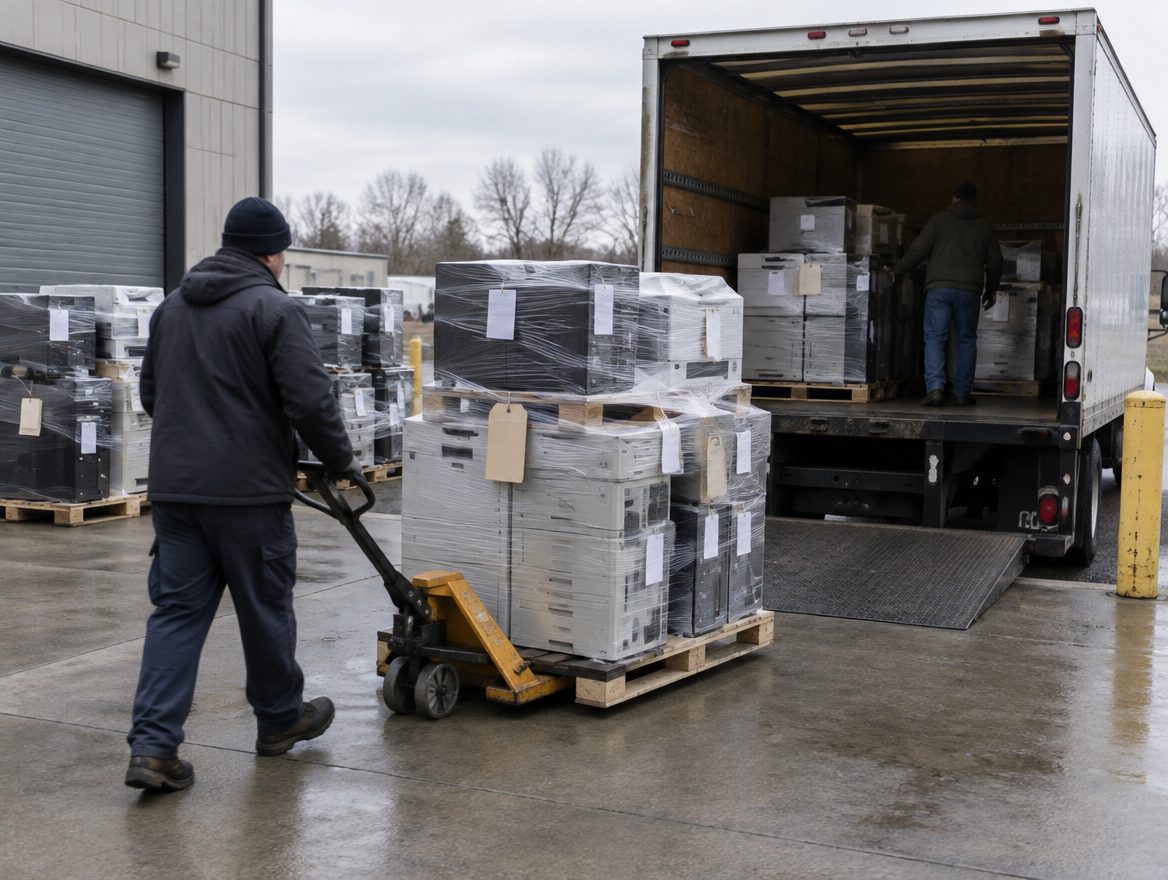
Logistics · 4 applications
Item level visibility from the dock to the resale channel.
Logistics providers move goods they do not own and often cannot identify. Vendidit gives the operator an item level record at receipt, a disposition for everything that will not ship as planned, and a channel for everything that should be sold.
DeploymentUpstream inside the operator’s existing facility, on AWS or integrated with the warehouse management system already in place.
Past performanceLogistics engagement. Item level returns processing for a third party logistics operator, deployed on the platform. Case study in preparation. Case studies →
How to buyDirect, or under a technology licensing agreement with a partner. Deployed inside your existing operation. How to buy →
Pallet level visibility ends where the problem begins.
The moment a shipment breaks, a return arrives, or a client’s inventory ages, the operator is handling items it has no record for. Every such item costs labor, space and, eventually, a write-off.
The platform gives the operator a record at the first touch, a disposition for everything that will not ship as planned, and a channel for everything that should be sold, with recovery returned to the client.
Where the technology changes the work
Four applications.
01
Item level receipt
Identity and condition at receipt, bound to the client, the shipment and the location.
02
Blind and unplanned returns
Items that arrive without a record are identified and matched to a client, so they are billed and dispositioned rather than shelved.
03
Disposition and resale
Damaged, aged and abandoned inventory routed to repair, resale or disposal by rule, with recovery returned to the client.
04
Warehouse operations
Receipt, put away, task assignment, pick, pack and ship at item level, inside the existing facility.
Recommended product
Upstream is the platform, built for the warehouse floor.
The product operators use to identify, disposition and resell at item level, deployed alongside the warehouse management system already in place.
- Item level identification and grading at receipt
- Disposition by rule, channel routing and resale
- Deployed alongside the existing WMS in days
Sources
- Captures at the dock
- Client manifests and serials
- Warehouse and transportation systems
Platform
- Identification
- Condition and valuation
- Custody, events and verification
Decisions
- Ship, hold or disposition
- Channel selection
- Client billing and recovery
What we optimize for
Stakeholders and outcomes.
| # | Stakeholder | Outcome | What changes | Capability |
|---|---|---|---|---|
| 01 | Operations leadership | Labor per unit, down | A record at the first touch | Operate |
| 02 | Client services | Every item billed to a client | Blind receipts matched and recorded | Sell |
| 03 | Facility management | Aged inventory dispositioned | Rules applied before space is consumed | Route |
| 04 | Finance | Recovery as a revenue line | Resale outcomes written to the record | Route |
Capability names the platform function that delivers the change. All 5 capabilities →
Questions
Questions we are asked
- 01
What is a blind return?
An item that arrives without a record. It costs money until someone can say what it is and whose it is. The platform identifies it from the capture and matches it to a client, so it is billed and dispositioned rather than shelved.
- 02
Does it replace the WMS?
No. It is deployed alongside the warehouse management system already in place, and integrated with it when the operator wants that.
- 03
How is recovery returned to the client?
Resale outcomes are written to the record by client, so recovery is reported and returned by rule.
- 04
How long to deploy in a facility?
Days, not quarters. The first item is recorded on day one with no integration required.
Discuss your requirements with our team.
Our solutions architects work directly with logistics providers and their clients.