
Insurance · 5 applications
Know what you insure before you insure it. Settle the claim from evidence when it comes.
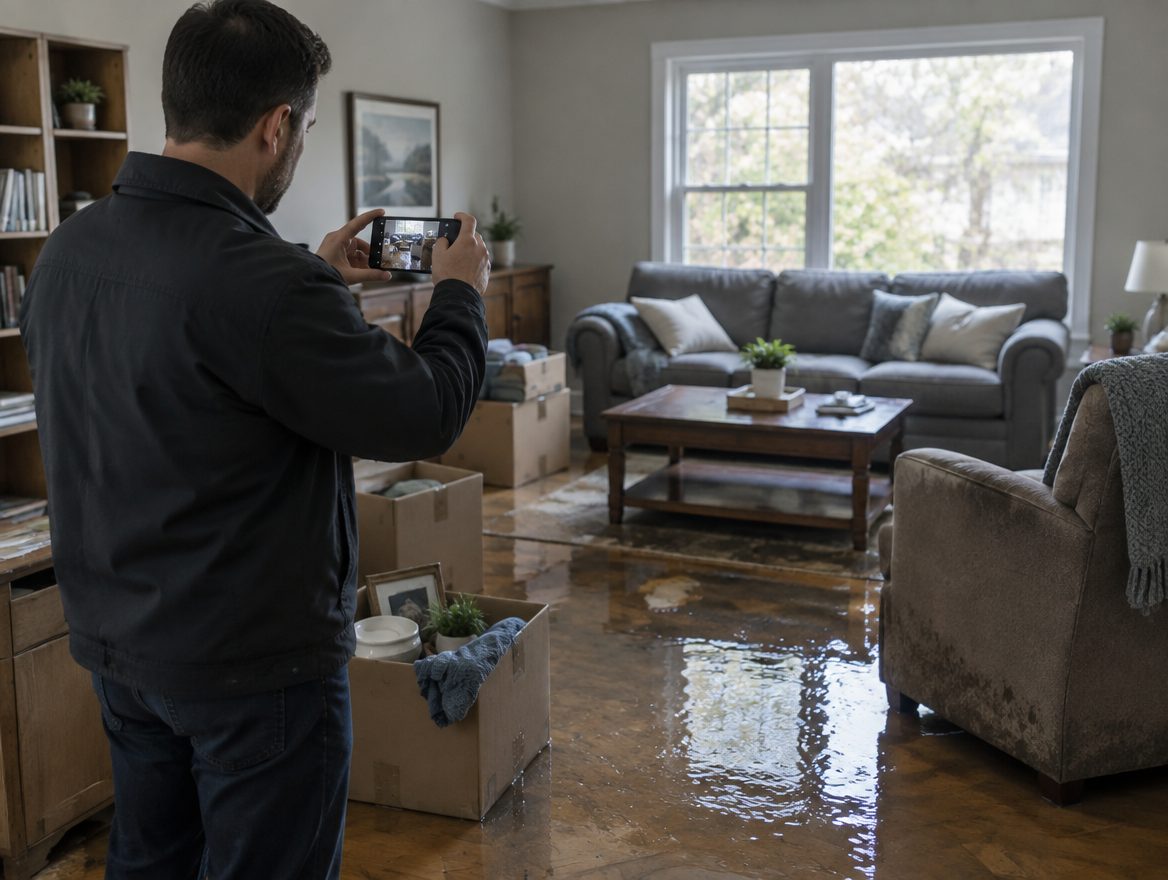
A contents policy begins with a schedule the policyholder typed, and a contents claim begins with photographs and ends with a spreadsheet. The distance between them is where cost, delay and dispute live. Vendidit applies visual intelligence at policy inception and at claim time, on one record, and manages salvage disposition on the same record.
DeploymentClaimLeo on AWS, in an environment built for regulated insurance data, with evidence retained for the life of the policy and the claim.
Past performanceInsurance engagement. Contents claims valuation on the platform for a regulated carrier. Case study in preparation. Case studies →
How to buyDirect, or under a technology licensing agreement with a claims platform or integrator. How to buy →
The evidence in a policy and a claim is a photograph. The process treats it as an attachment.
Underwriters accept a schedule the policyholder typed. Adjusters identify items by hand, value them by search, and reconcile them against that schedule. Salvage is handled after the fact, by a separate vendor, on a separate record.
The platform records what is insured before the loss, identifies each item from the evidence when the claim comes, returns a condition and a valuation with its basis, and carries the record through to salvage disposition, so the policy, the claim and the recovery are one process.
Where the technology changes the work
Five applications.
01
Pre loss verification
Evidence at policy inception or renewal that an insured item exists, where it is, when it was captured and its condition, with a value bound to the record. The schedule matches the home, and the claim starts from evidence.
02
Contents identification and valuation
Each captured item is identified, its condition assessed and a valuation returned with the basis for it, at the pace the claim demands.
03
Schedule reconciliation
The policyholder’s schedule is matched to the evidence, so discrepancies surface at the start of the claim rather than at the end.
04
Salvage and subrogation
Items the carrier takes title to are valued and routed to the recovery channel with the best outcome, with the record intact.
05
Catastrophe response
The same method at volume, with field captures from any device feeding the claim file directly.
Recommended product
ClaimLeo is the platform, built for the policy and the claim.
The product carriers, underwriters and adjusters use to run contents policies and claims on the Vendidit platform, with the record carried from inception through salvage.
- Pre loss verification at policy inception and renewal
- Identification and valuation from the policyholder’s evidence
- Schedule reconciliation at the start of the claim
- Salvage disposition on the same record
Sources
- Policyholder and adjuster captures
- Policy and claim schedules
- Claims and policy systems of record
Platform
- Identification
- Condition and valuation
- Custody, events and verification
Decisions
- Bind, settle, repair or replace
- Salvage and subrogation
- Reserve and severity
What we optimize for
Stakeholders and outcomes.
| # | Stakeholder | Outcome | What changes | Capability |
|---|---|---|---|---|
| 01 | Underwriting and policy sales | A schedule that matches the home | Evidence bound to the policy at inception | Identify |
| 02 | Claims leadership | Cycle time and severity, both down | Identification and valuation at intake | Identify |
| 03 | Field adjuster | Fewer hours per claim | The evidence does the first pass | Identify |
| 04 | Salvage and recovery | Recovery on every eligible item | Disposition on the claim record | Route |
| 05 | Compliance | A defensible valuation basis | The basis is recorded with the value | Identify |
Capability names the platform function that delivers the change. All 5 capabilities →
Questions
Questions we are asked
- 01
What is pre loss verification?
Evidence captured at policy inception or renewal that an insured item exists, where it is, when it was captured and what condition it is in, with a value bound to the policy record. When a claim comes, it starts from that evidence rather than from a typed schedule.
- 02
Does the policyholder need an app?
The capture comes from any mobile device. The carrier decides whether the policyholder, an agent or an adjuster makes it.
- 03
How is the valuation defended?
Every valuation is returned with its basis, drawn from the item, the market and the channel, and the basis is recorded with the value on the claim record.
- 04
Is it built for regulated data?
Yes. ClaimLeo is deployed in an environment built for regulated insurance data, on Amazon Web Services, with evidence retained for the life of the claim.
Discuss your requirements with our team.
Our solutions architects work directly with carriers, underwriters, adjusters and their delivery partners.